.webp)

Insolvency Notice Codes and Their Meaning
Every business in the UK faces some level of insolvency risk, and that risk has grown in recent years. Government figures for 2024 show that one in every 191 active companies in England and Wales became insolvent, which highlights how important it is to stay alert to early signs of financial trouble. Source: gov.uk.
This is where insolvency searches can make a real difference. Notices published in The Gazette often appear long before any update reaches Companies House, which means you can spot warning signs early and respond before the situation worsens. For people working in debt collection or outsourced credit control, this early visibility can be the deciding factor between recovering a balance or losing it.
This guide explains the meaning of the main insolvency notice codes, how they relate to each step in the insolvency process, and what you can do when you see them.
What Insolvency Notice Codes Are
When a company goes through financial difficulty, official statements are placed in The Gazette. These are public announcements that show exactly what stage the company has reached in its insolvency process. You will find notices for administration, liquidation, winding up petitions, bankruptcy proceedings for individuals, and voluntary arrangements. Because The Gazette publishes updates quickly, insolvency searches are often the fastest way to check whether a company is still trading, has entered liquidation, or is under the control of an insolvency practitioner.
Relying on Companies House alone can leave you a step behind. There can be several weeks between a business running into trouble and the formal record showing it. Insolvency searches help bridge that gap and give you early access to reliable information.
Why Insolvency Searches Matter
Early insight can save time, resources, and in some cases a significant amount of money. When you see a notice relating to one of your customers, it gives you the chance to act before the position becomes irreversible. You can review outstanding balances, chase overdue invoices, place an account on hold, change payment terms, or contact the appointed insolvency practitioner to submit a claim.
Understanding the meaning of insolvency notice codes can also help you determine whether the business is likely to carry on trading, if they are attempting a rescue plan, or if they are preparing to close. Rather than guess, you have clear information that helps you decide what to do next. For those working in debt collection or outsourced credit control, this clarity makes decision making more straightforward and reduces the risk of unpaid accounts building up.
Key Insolvency Routes and the Notice Codes You May See
Companies follow different procedures depending on their financial position and the decisions made by directors, creditors, or the court. Each route has its own notice types, and recognising them helps you understand what is happening and what your next steps should be.
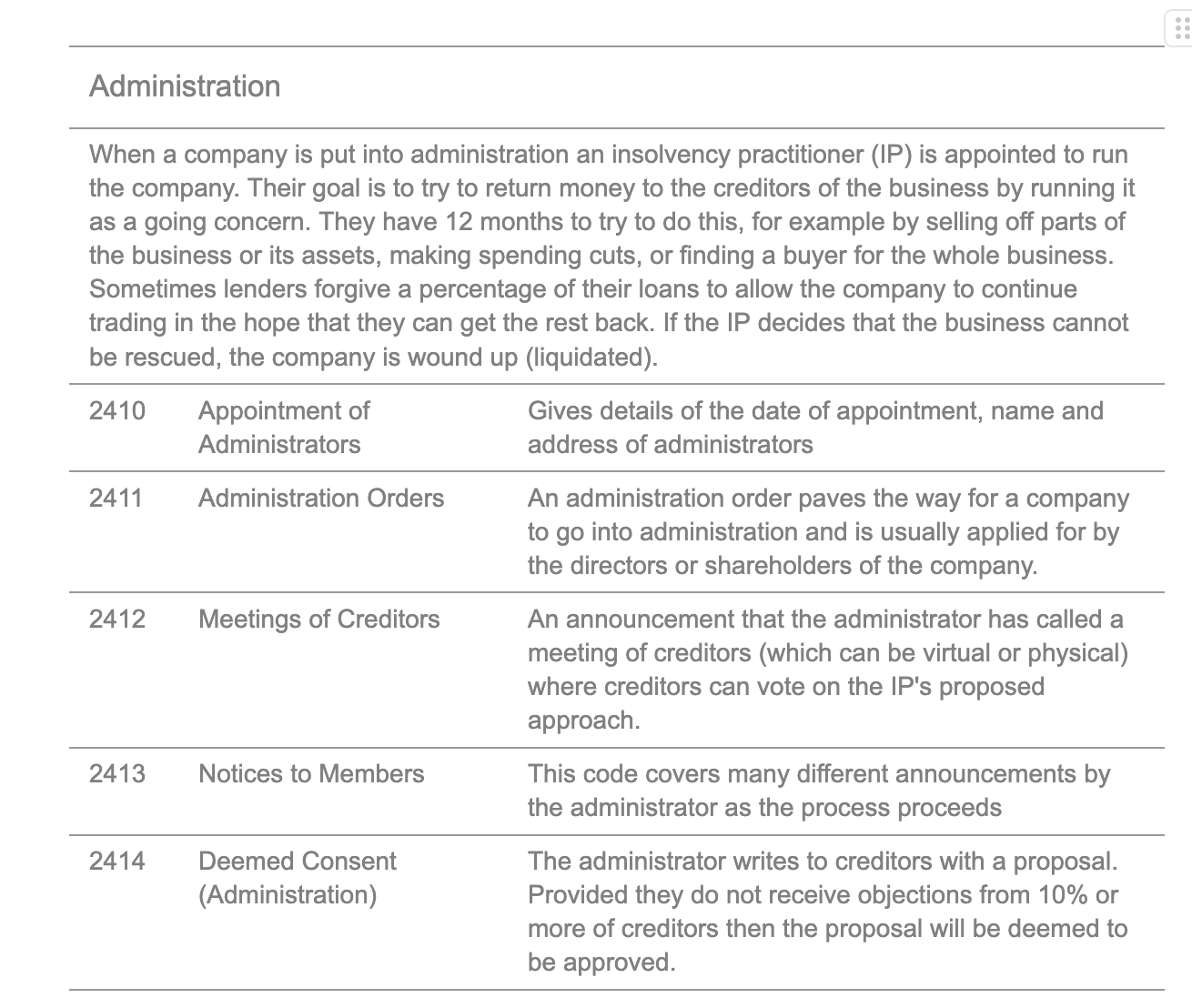
Administration
Administration is a process designed to protect a company while a professional insolvency practitioner takes control. The aim is usually to rescue the business, sell it, or achieve a better result for creditors than would otherwise be possible.
Insolvency searches will show notices such as the appointment of an administrator, a notice of intention to appoint one, the administrators proposals, or periodic progress reports. These notices signal that the company may still be trading but is under strict financial supervision. During this time, most legal action is paused.
If you are involved in debt collection, it is important to contact the administrator as soon as possible to register your interest. Payments may be withheld while the administrator reviews the companys situation, so responding promptly helps avoid missing important deadlines.
Receivership
Receivership takes place when a secured lender appoints a receiver to recover funds owed to them. This appointment usually relates to charges held over company assets.
You may see notices showing the appointment of an administrative receiver or updates from the receiver themselves. A business may continue operating during this period, although the receivers main responsibility is to the secured lender. Unsecured creditors often receive less priority.
If you are owed money, it is sensible to contact the receiver to note your claim. Prospects of recovery can vary depending on the value of assets and the amount owed to the secured lender.
Members Voluntary Winding Up
This is a planned closure used when a company is solvent and able to pay all its debts. Directors make a declaration confirming this, and a liquidator is appointed to oversee the process.
Insolvency searches will show notices such as the declaration of solvency, the appointment of a liquidator, and notices of final meetings. These updates confirm that the company is closing in an orderly way. Creditors should still be paid in full, and any delays or concerns may indicate a deeper problem that requires monitoring.
Creditors Voluntary Winding Up
A Creditors Voluntary Winding Up, often known as a CVL, is the most common route for companies that can no longer pay their debts. Directors choose to close the company, and creditors play a key role in selecting the liquidator.
Notices you may see include invitations to meetings of creditors, the appointment of a liquidator, and periodic progress reports. These notices confirm that the company has stopped trading or will stop shortly. If you work in outsourced credit control or debt collection, it is important to submit your claim to the liquidator quickly. Delays may affect how much, if anything, you recover.
Winding Up by the Court
This process usually begins when a creditor issues a winding up petition. If the court grants the order, the company enters compulsory liquidation and the Official Receiver takes control.
Notices will include the advertisement of the winding up petition, the court order itself, and the appointment of the Official Receiver. These notices are serious indicators that the company is likely to cease trading very soon. If you are owed money, acting as soon as you see the petition advertised gives you a better chance of recovering something. Waiting until the company closes often reduces recovery prospects significantly.
How Insolvency Searches Help You Act
Insolvency searches give you direct access to information about who is handling the companys affairs. This allows you to contact the administrator, liquidator, or receiver to register your interest and receive updates. Knowing who is in charge helps you understand what actions are needed and how long the process may take.
In addition, when you see a notice relating to one of your accounts, you can place the customer on hold, ask for upfront payments, adjust your credit control process, or stop providing goods or services. These steps help protect your cash flow and reduce the chance of future non payment.
If you use outsourced credit control, your team can respond promptly and update you on any changes. Regular checks through insolvency searches support consistent monitoring and prevent issues from being overlooked.
How We Can Help
If late payments are affecting your business or if you have concerns about risky accounts, we offer services that can help you regain control.
Our debt collection service is designed to recover overdue balances in a professional and timely way. We contact customers, negotiate payments, and follow the correct procedures to secure your funds wherever possible.
Our outsourced credit control service handles your day to day credit management tasks, helping you reduce aged debt, improve cash flow, and keep track of customers who show signs of financial difficulty. Regular monitoring through insolvency searches is part of this process, giving you peace of mind that potential issues are spotted early.
Understanding insolvency notice codes
In conclusion, understanding insolvency notice codes gives you a clear advantage when managing customers who may be in financial trouble. These public notices reveal important details about whether a company is still trading, the stage it has reached in the insolvency process, and who to contact if you need to register a claim. For anyone involved in debt collection or outsourced credit control, insolvency searches provide early insight that helps you act quickly and protect your business from further loss.
By learning what each notice means, you can make informed decisions, adjust your approach, and take the right steps at the right time. This early awareness can make a real difference to the outcome of unpaid accounts.
If you need expert support to handle late payments, understand insolvency notices, or strengthen your credit control process, you can contact My Credit Controllers for advice.
Administration
Receivership

Members' Voluntary Winding Up

Creditors' Voluntary Winding Up

Winding up by the Court

How we can Help:
Outsourced Credit Control Service

.webp)
.webp)